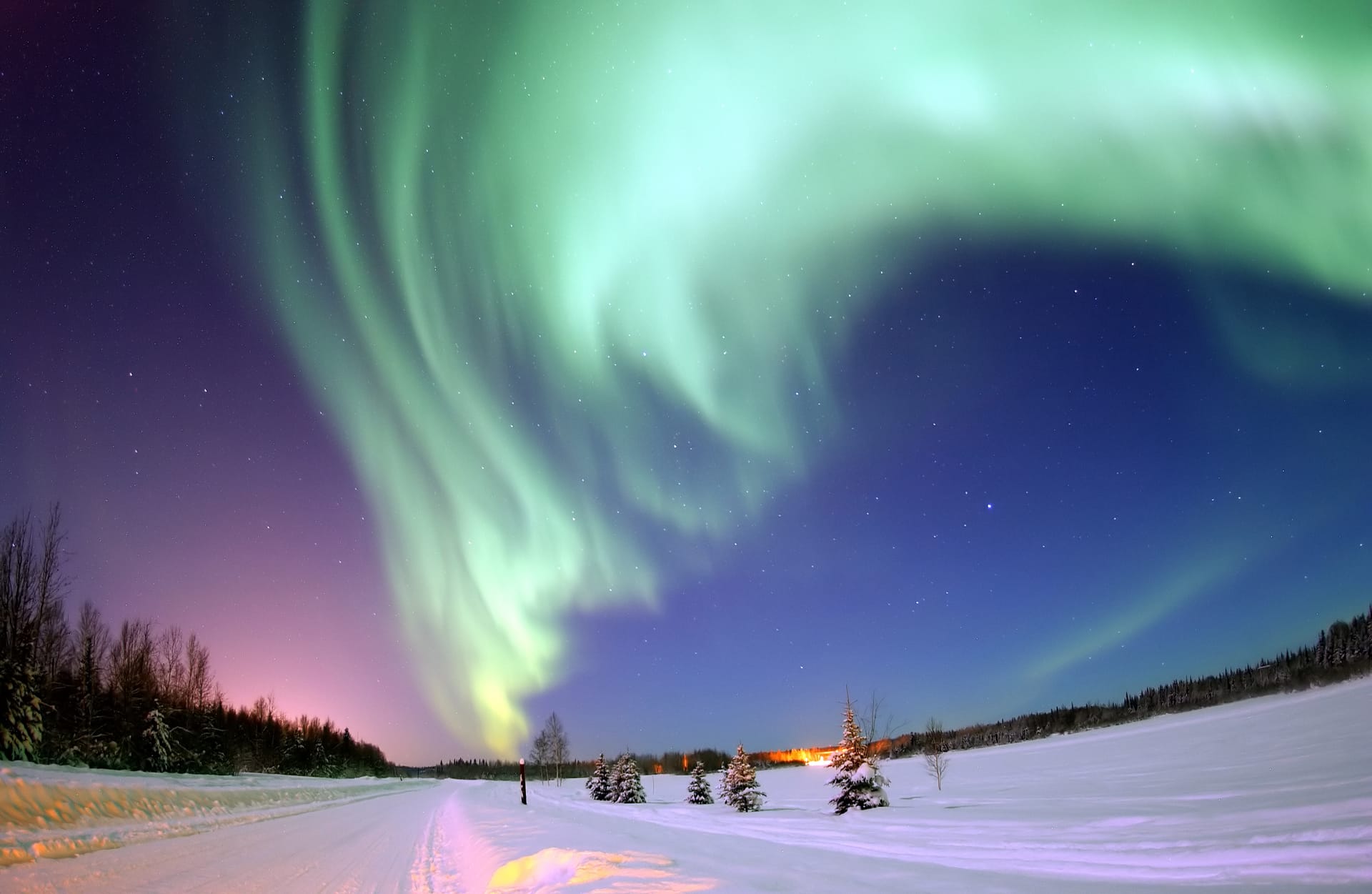
Northern Lights Guide 2026: When & Where to See the Aurora Borealis
Plan your perfect aurora night with science-backed timing, location guidance, and real-time tracking with AuroraMap.app.
What is the Aurora Borealis?
The Aurora Borealis is a luminous dance caused by solar particles colliding with Earth's atmosphere. Guided by our planet's magnetic field, these charged particles energize oxygen and nitrogen high above the poles—releasing waves of green, purple, and red light.
Think of it as space weather made visible: a breathtaking ribbon of light that appears when the sun's activity aligns with the dark, clear skies of the north.
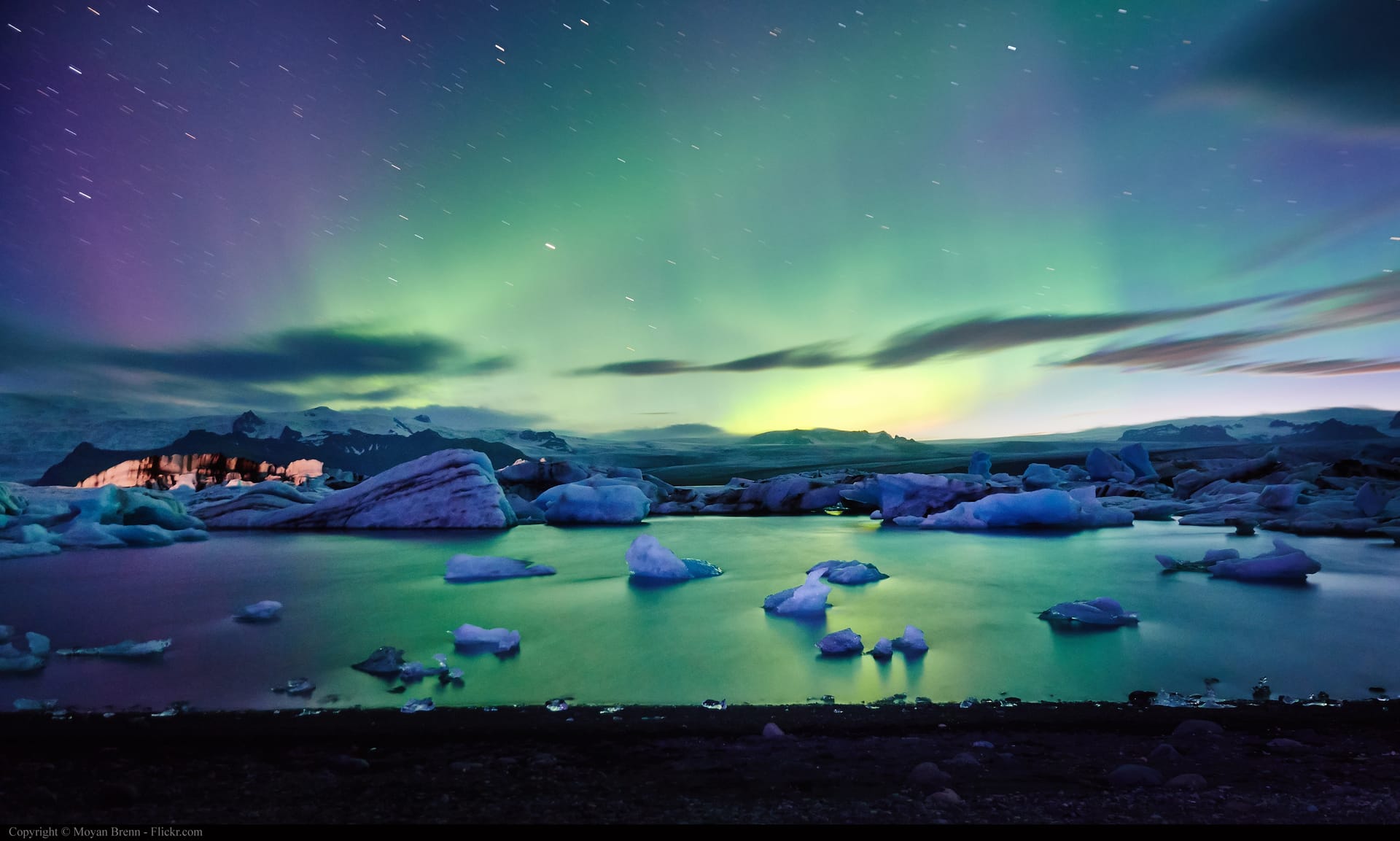
Solar Cycle 25: The Current Opportunity
The Sun's magnetic field reverses approximately every 11 years, marking a Solar Cycle . Sunspots—cooler regions of intense magnetic activity—serve as the primary visual indicator of this cycle's progression.
Higher sunspot counts correlate with increased solar flare and Coronal Mass Ejection (CME) activity. These events drive the geomagnetic storms responsible for aurora sightings at lower latitudes.
Cycle 25 peaked at 161 (October 2024) . Critically, 2025 remained exceptionally strong—December 2025 monthly mean reached 124, nearly matching the peak level. This is the strongest cycle since Cycle 23 (2001, peak: 180), offering prime aurora conditions through late 2025.
Source: WDC-SILSO International Sunspot Number Version 2.0
Monthly Sunspot Number (13-Month Smoothed)
International Sunspot Number Version 2.0 • WDC-SILSO
Data: WDC-SILSO (Royal Observatory of Belgium) • 13-month smoothed International Sunspot Number V2.0
Solar Flares
More frequent during maximum
CMEs
Massive particle ejections
Lower Latitudes
Aurora visible further south
Intensity
Brighter and more dynamic
When and Where to see the Aurora
When to see it
- Solar Cycle 25 Peak: Active from late 2024 through 2026. Higher sunspot counts correlate with more frequent geomagnetic storms.
- Equinoxes (March/September): The Russell-McPherron effect often amplifies geomagnetic activity during equinox periods.
- Local Midnight: 22:00–02:00 LT remains the optimal window, when the auroral oval is typically most overhead.
- Dark Sky Requirement: New moon periods and minimal light pollution significantly improve visibility of faint aurora.
Where to see it
The aurora is confined to the Auroral Oval , approximately 65°–75° magnetic latitude during quiet periods. During geomagnetic storms (Kp 5+), this oval expands equatorward, enabling sightings at lower latitudes.
Aurora Hunting Checklist
Pre-Trip Planning
- Check KP index forecast (aim for KP 4+)
- Check cloud cover (clear skies required)
- Check moon phase (new moon ideal)
- Find dark location (light pollution free)
- Allow 30+ min for dark adaptation
Real-Time Checks
- Monitor Bz (aim for -10nT or lower)
- Check solar wind speed (500+ km/s ideal)
- Watch for NOAA forecast updates
- Look at aurora oval position
- Time it right (22:00-02:00 local)
Minimum KP Index for Your Latitude
Aurora Probability Calculator
Estimate your chances of seeing the aurora based on your location and current conditions.
At 45°N latitude, you need KP 7+ for a good chance of seeing the aurora.
* This is a simplified estimate. Actual visibility depends on cloud cover, light pollution, and Bz direction.
How to Read Maps AuroraMap
Don't just look for lights—understand the science. Here is your complete guide to the tools and data points available on our dashboard.
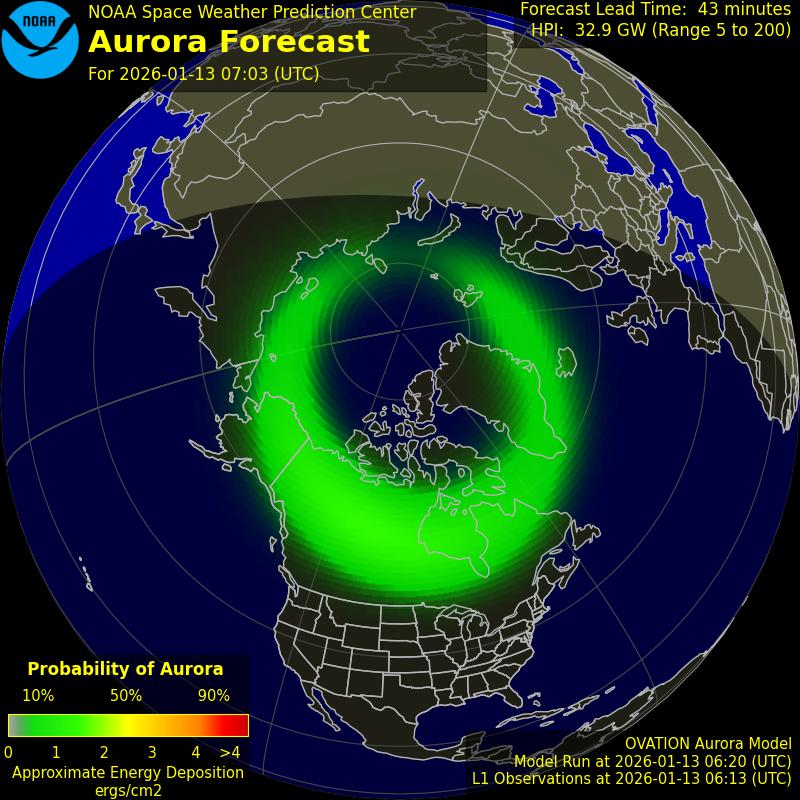
Aurora Map (3D + Static)
What it tells you
Shows the real-time position and intensity of the aurora oval. Red indicates high probability.
How to use it
Look for your location pin. If the oval covers you, look up! Toggle between 3D globe and 2D map views.
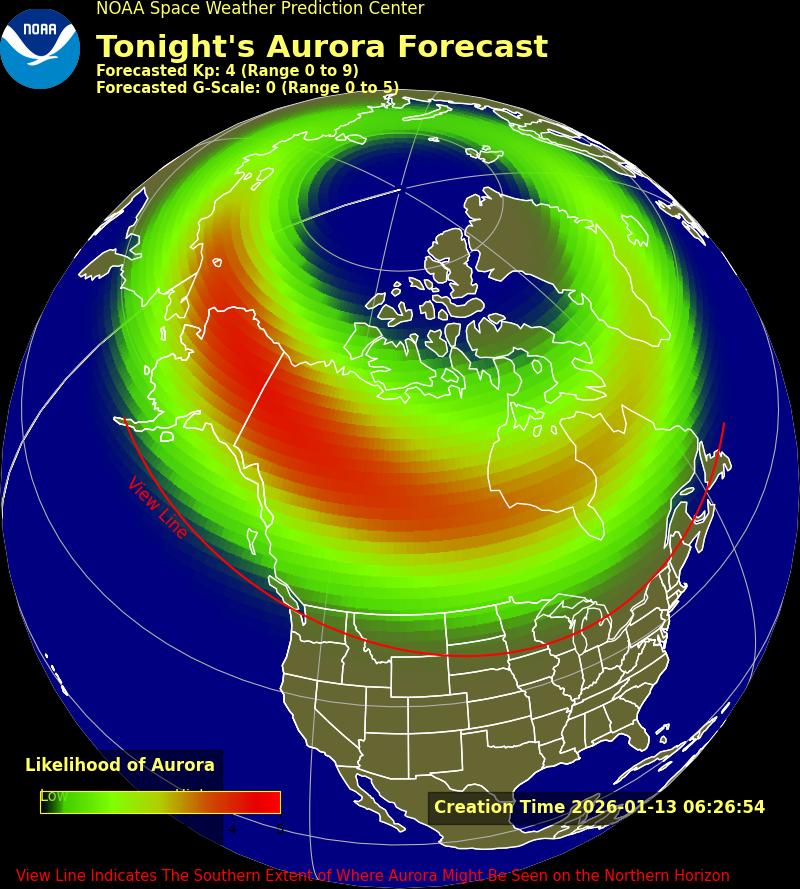
Tonight's Viewlines
The southern-most boundary where aurora might be visible on the horizon.
How to use it
If you are north of the red line, you have a chance. Clear skies are required.
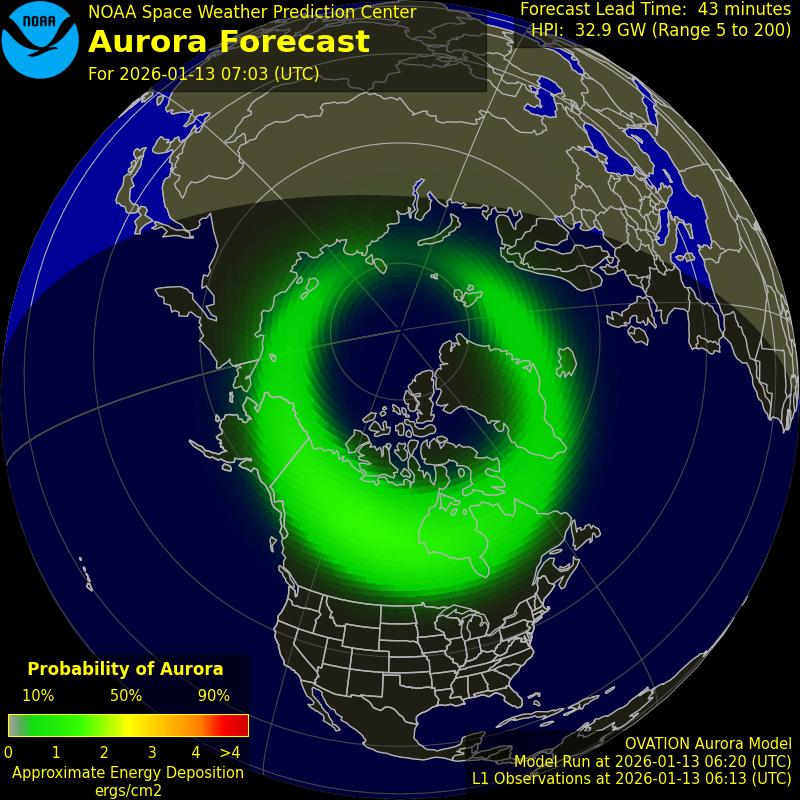
NOAA 30-min Forecast
A short-term prediction based on solar wind data arriving at the L1 satellite point (1 million miles away).
How to use it
This is your "go now" tool. If the oval expands toward you, you have about 20-30 minutes before it hits.
KP Index
0-9Global geomagnetic storm intensity. Higher is better.
Bz (Magnetic Field)
The direction of the solar wind's magnetic field. This is the "gatekeeper".
You want Bz to be negative . This opens the door for energy to enter Earth's atmosphere.
HPI (Power)
GigawattsHemispheric Power Index. Total energy entering the atmosphere.
Location & Clouds
Aurora is 100km up. Clouds hide everything. Use the map to find clear skies, even if it means driving an hour.
Check Local WeatherCME Impact
Coronal Mass Ejections cause the biggest storms. Watch the "Impact Watch" for incoming solar hits (24-48h warning).
Monitor CMEs27-Day Forecast
The sun rotates every 27 days. Active regions often return. If it was good last month, check this forecast for the return.
Long-term ForecastMoon & Time
Full moons wash out faint lights. Check moon phase. Use the Timezone selector to match your local clock.
Moon PhasePhotography Tips
The aurora often looks brighter on camera than to the naked eye. Use a tripod, manual focus, and a fast lens to reveal the full color.
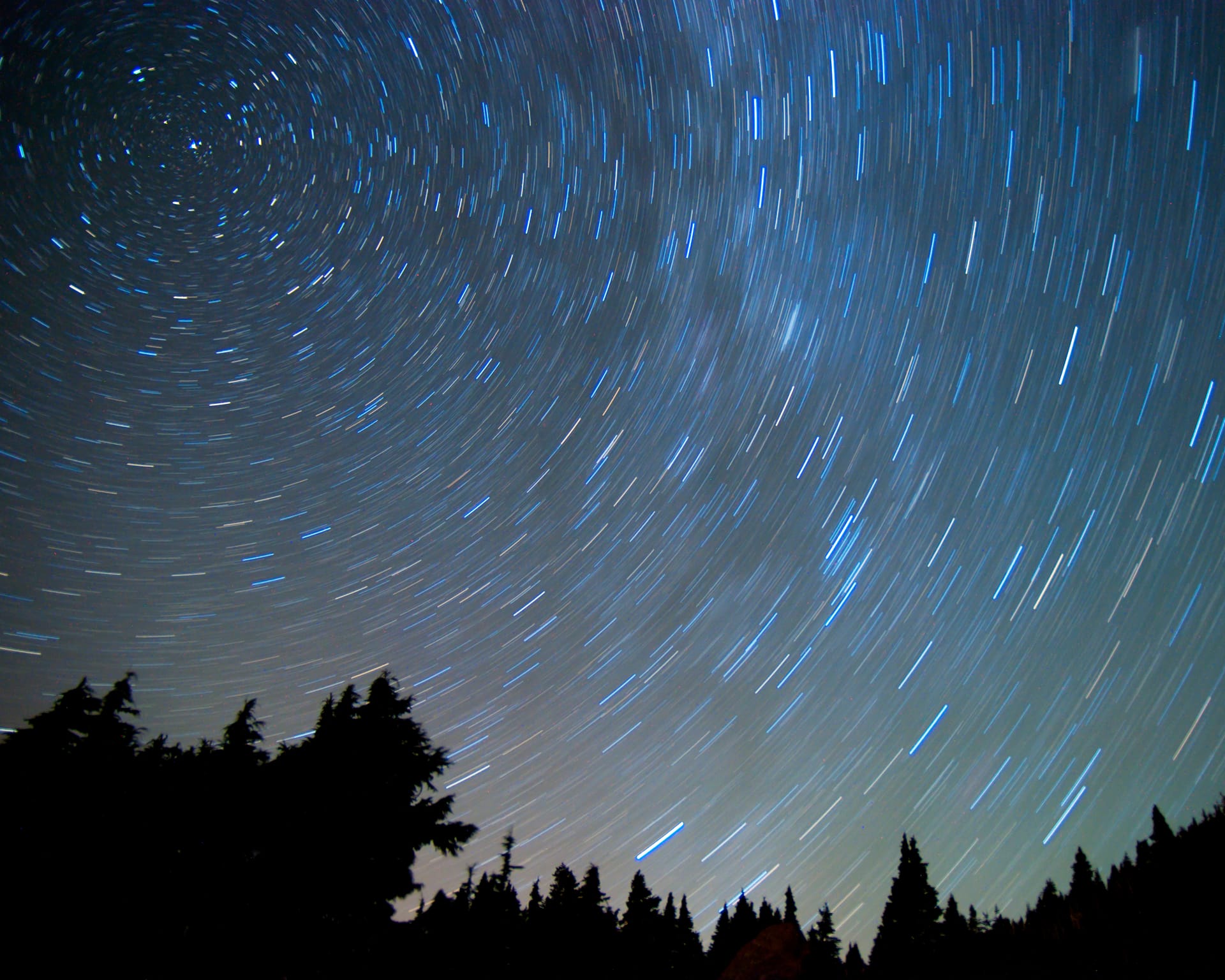
Long exposure reveals colors the eye might miss.
Sources & References
Forecast Models
Image Credits
Hero Image
U.S. Air Force photo by Senior Airman Joshua Strang
Public Domain (US Government)
Aurora Bands
U.S. Air Force photo by Senior Airman Joshua Strang
Public Domain (US Government)
Photography Background
U.S. Fish and Wildlife Service
Public Domain (US Government)
Camera Setup
Alan Labisch via Unsplash
CC0 / Public Domain
NOAA data and forecast images are provided by the NOAA Space Weather Prediction Center.
